How a Failing 5WS40156Z Presents
DW10 piezo failures present in three signatures distinct from the solenoid families. The first is an audible 'tick-tick' from one cylinder at warm idle — the piezo stack has cracked under thermal cycling and is no longer holding its lift profile. The second is intermittent limp-mode triggered under hard acceleration above 3,000 rpm — the ECU has detected a rail-pressure deviation it cannot trim out and has dropped to safe map. The third is a creeping fuel-economy loss with no MIL — typically 6 to 12 mpg over twelve months — caused by atomisation drift while the unit is still mechanically inside spec.
Because piezo injectors are voltage-driven rather than current-driven, they do not present in live data the same way as solenoid units. A clean leak-off test does not exonerate a piezo — internal stack micro-cracking can knock the timing off without changing return volume. Fall back to per-cylinder rail-pressure deviation and IMA correction values on PSA DiagBox / Lexia or Ford IDS / FDRS to confirm.
Vehicles and Engine Codes Using the 5WS40156Z
Engine code coverage spans PSA RHR, RHD, RHL, RHF, RHG, RHK, RHM, RHP and RHS variants of the DW10BTED4 and DW10CTED4, plus Ford D4204T / T2 / T4 / T5 / T6 / T7 sub-codes used in the joint-venture Volvo D-series. UK fitment includes Peugeot 307 / 308 / 407 / 508 / 3008 / 5008 / Expert / Boxer; Citroen C4 / C5 / C8 / DS4 / DS5 / Dispatch / Relay; Ford Galaxy / S-Max / Mondeo MK4 / Kuga MK1 / Focus ST170 TDCi; Volvo S40 / V50 / S60 / V60 / V70 / S80 / XC60 / XC70 with the 2.0D / D3 / D4 designation; and the Mini Cooper SD R56 / R60 fitted with the PSA-supplied 2.0 SD engine.
5WS40156Z supersedes earlier production codes 5WS40156, 9686191080, 9683456385 and the Ford-side 1980HX / 1980JF / 1980JG variants. Bore profile and connector keying are identical across the supersession — the Z-suffix indicates the calibration map updated for the Euro 5b emissions tightening, but the unit physically interchanges with the earlier production run.
Why a DW10 Piezo Behaves Differently to a Solenoid
The piezoelectric stack inside this injector replaces the solenoid armature found on equivalent Bosch units. A piezo opens and closes roughly four times faster than a solenoid, which is why the DW10 platform was specified for it — the engine runs three pre-injections, a main injection and a post-injection on every combustion cycle, which is impossible inside the time budget a solenoid permits.
The diagnostic consequence is that piezo failures often do not throw the cylinder-balance fault you expect. A worn piezo stack misses its high-pressure shot but still hits the low-pressure pre-injections, so the ECU sees average fuel quantity within tolerance. The cylinder is still over-fuelling on average — but the ECU does not realise it. That is the single most important reason DW10 owners arrive at the workshop with cosmetic symptoms (smoke, smell, MPG drop) and a clean ECU read.
IMA / IQA Coding After Fitting
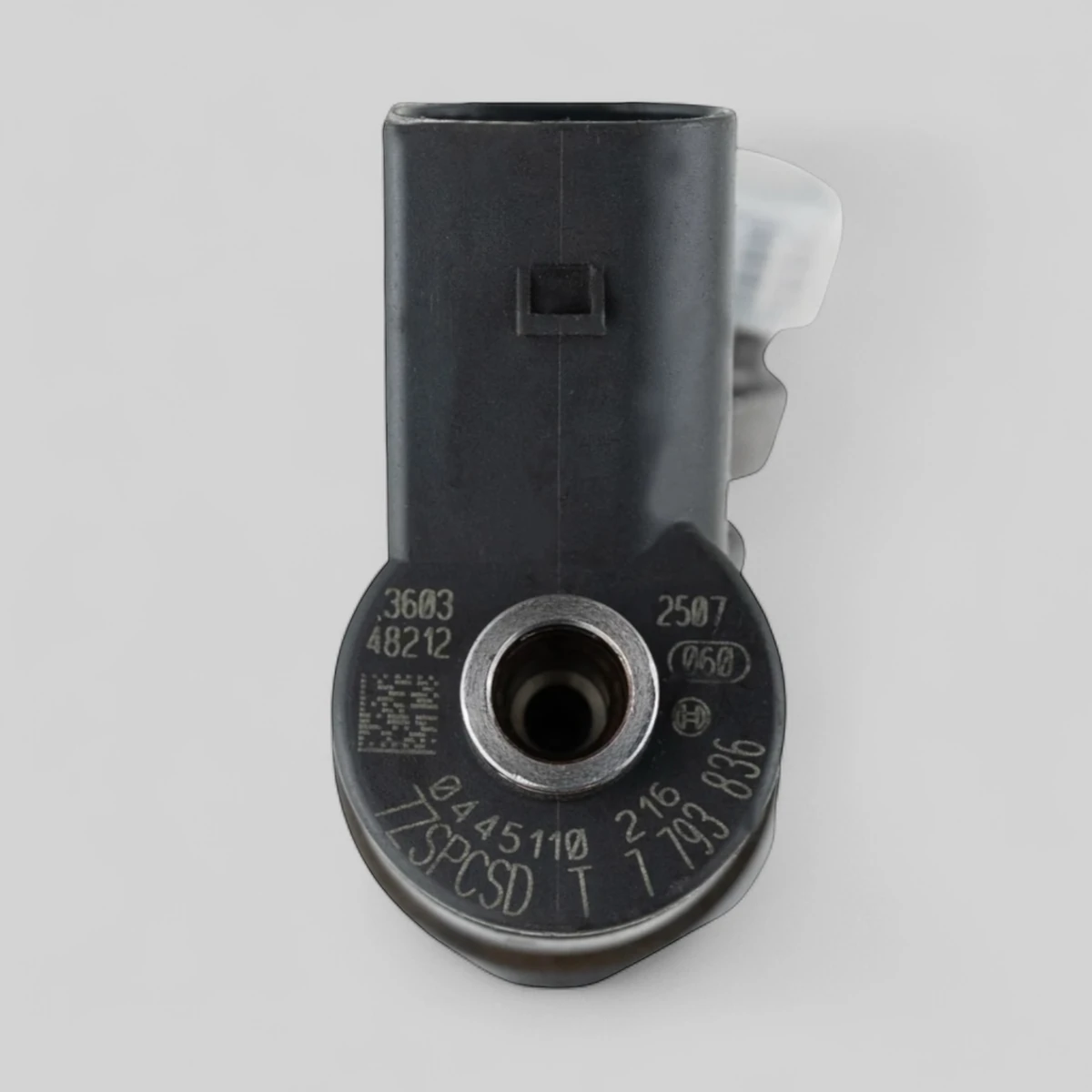
Continental's IMA (Injector Mean Adjustment) string for the DW10 platform is sixteen alphanumeric characters and lives on a small foil decal stuck to the top of every injector at the bench. PSA's main-dealer flow uses DiagBox / Lexia; Ford's flow uses IDS / FDRS; Volvo's uses VIDA / DICE. All three accept the same Continental IMA format — but the menu names differ across the three OEM toolchains and a fitter unfamiliar with the Volvo-side menu in particular can spend twenty minutes hunting for the correct submenu on a V70 / S80 D4204T.
The single failure mode here is a fitter who reads the OLD IMA string off the unit being removed and writes that into the ECU. Every Continental DW10 unit ships with a NEW IMA — the new string is the unit's individual flow signature, not a fitment marker. Use the new value, every time, on every cylinder. We retain a copy of the dispatched IMA against the order so any later warranty claim can be cross-checked against the day-one calibration.
Rail Pressure, HP Pump and Fuel Contamination
DW10 platforms run a Bosch CP1 high-pressure pump in their early form and a Continental / Siemens-VDO HP pump on the post-2010 piezo build. Either pump cannot mask a worn injector — but a contaminated fuel system can destroy a brand-new injector in under fifty miles. Before fitting any replacement, drop the fuel filter, check the rail and run a rail-side fuel-cleanliness test for water and metal swarf.
Workshops returning multiple piezo failures on the same vehicle within twelve months should always investigate fuel quality, the lift pump and the in-tank strainer before condemning the injectors a second time. We routinely refuse warranty claims where the returned unit shows visible water-corrosion or metal-swarf damage on the nozzle tip — these are fuel-side failures, not injector-side ones.
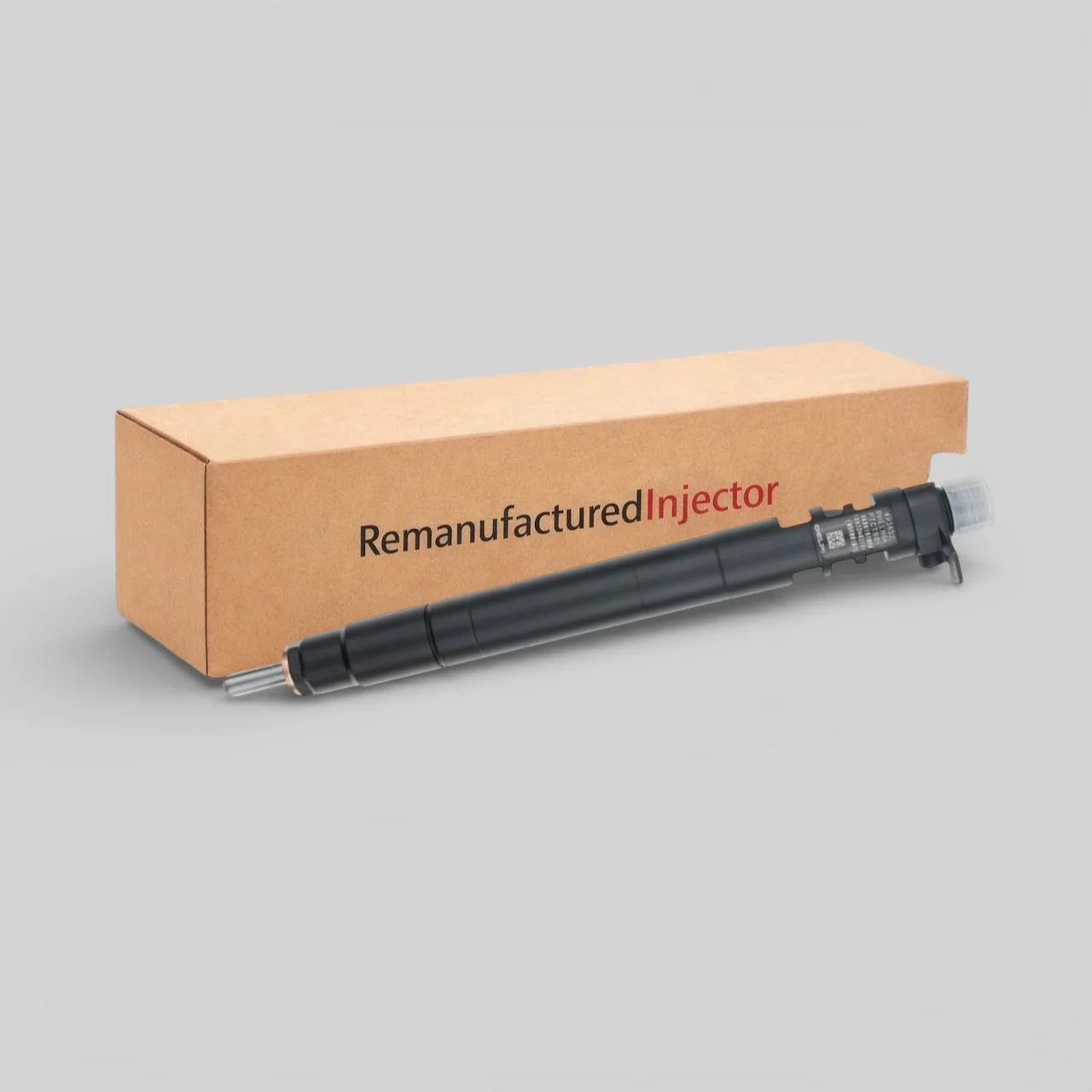
How DW10 Piezo Injectors Are Remanufactured
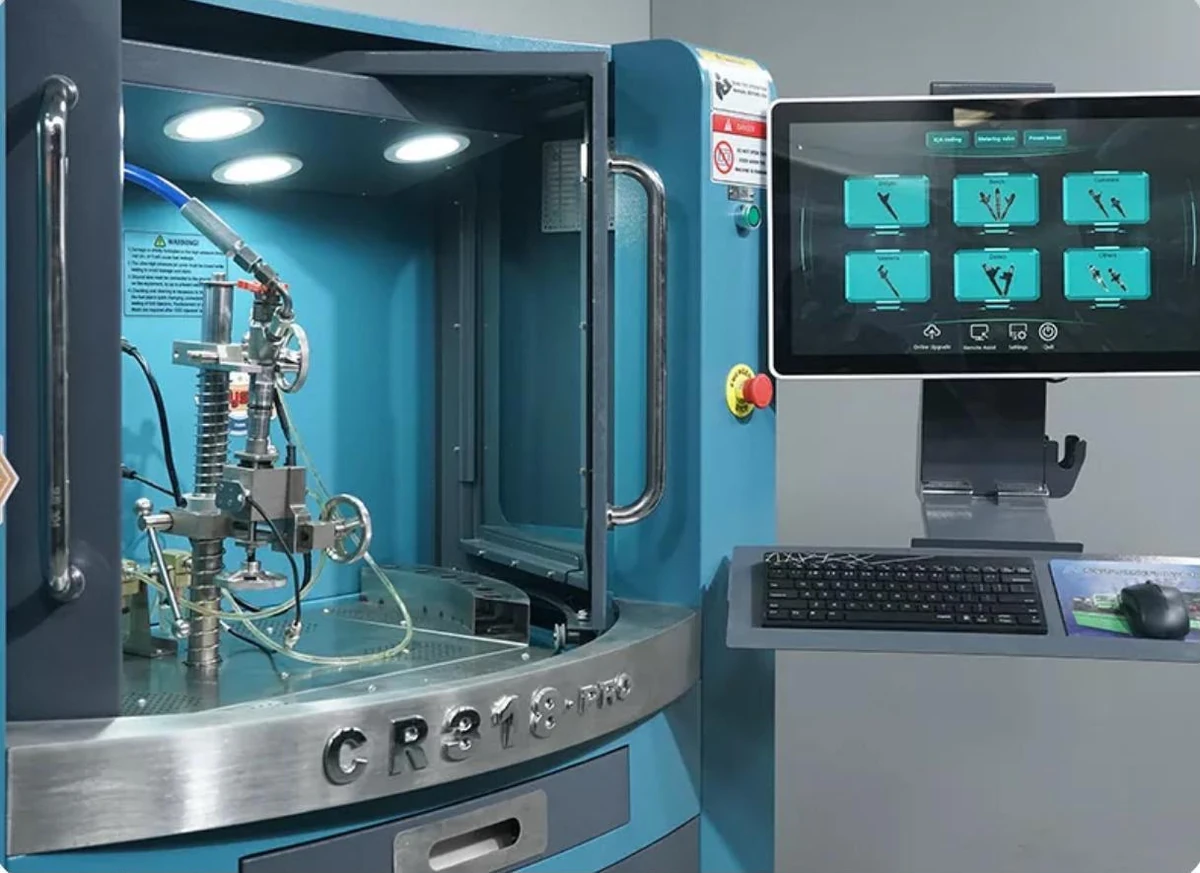
Each returned 5WS40156Z passes through a four-stage DW10-piezo workflow. Stage one is electrical: the piezoelectric stack is charged and discharged on a dedicated DW10-piezo rig and the charge-retention curve is logged against the OEM tolerance window — a stack that drops more than 4% over 1,000 cycles is condemned. Stage two is the high-pressure flush, run on a CR-bank capable of holding 1,800 bar through a calibrated three-fluid cycle. Stage three is metrology: nozzle bore, needle lift and seat profile are measured optically. Stage four is the signature shot — every spray angle is captured against the original DW10 / D4204T spec sheet.
Bench output is stamped as a fresh sixteen-character IMA / IQA string and printed onto a foil decal that ships on top of the body. We retain the bench print-out under the order number for two full calendar years. The DW10 piezo carries a £20 refundable core charge, refunded to the original payment method within five working days of the failed core arriving back at the workshop.