How a Failing EcoBlue Injector Presents
On the Ford 2.0 EcoBlue, a failing 2802002051380 injector typically presents first as repeat AdBlue dosing system warnings — the SCR is over-correcting for poor combustion on one cylinder and the dashboard logs an exhaust-emission fault that the dealer initially blames on the AdBlue tank or quality. The second signature is a creeping fuel-economy loss without any MIL — typical of late-stage nozzle wear on the EcoBlue platform. The third is intermittent limp-mode under hard acceleration in third or fourth gear above 2,500 rpm, often paired with a noticeable hesitation that disappears when the driver lifts off.
EcoBlue diagnosis requires Ford IDS / FDRS at minimum because the SCR / AdBlue interaction with injector wear is impossible to read on a generic OBD scanner. Live-data review of cylinder fuel-trim deviation, rail-pressure regulator duty cycle and the AdBlue dosing rate will quickly isolate which cylinder's injector is failing.
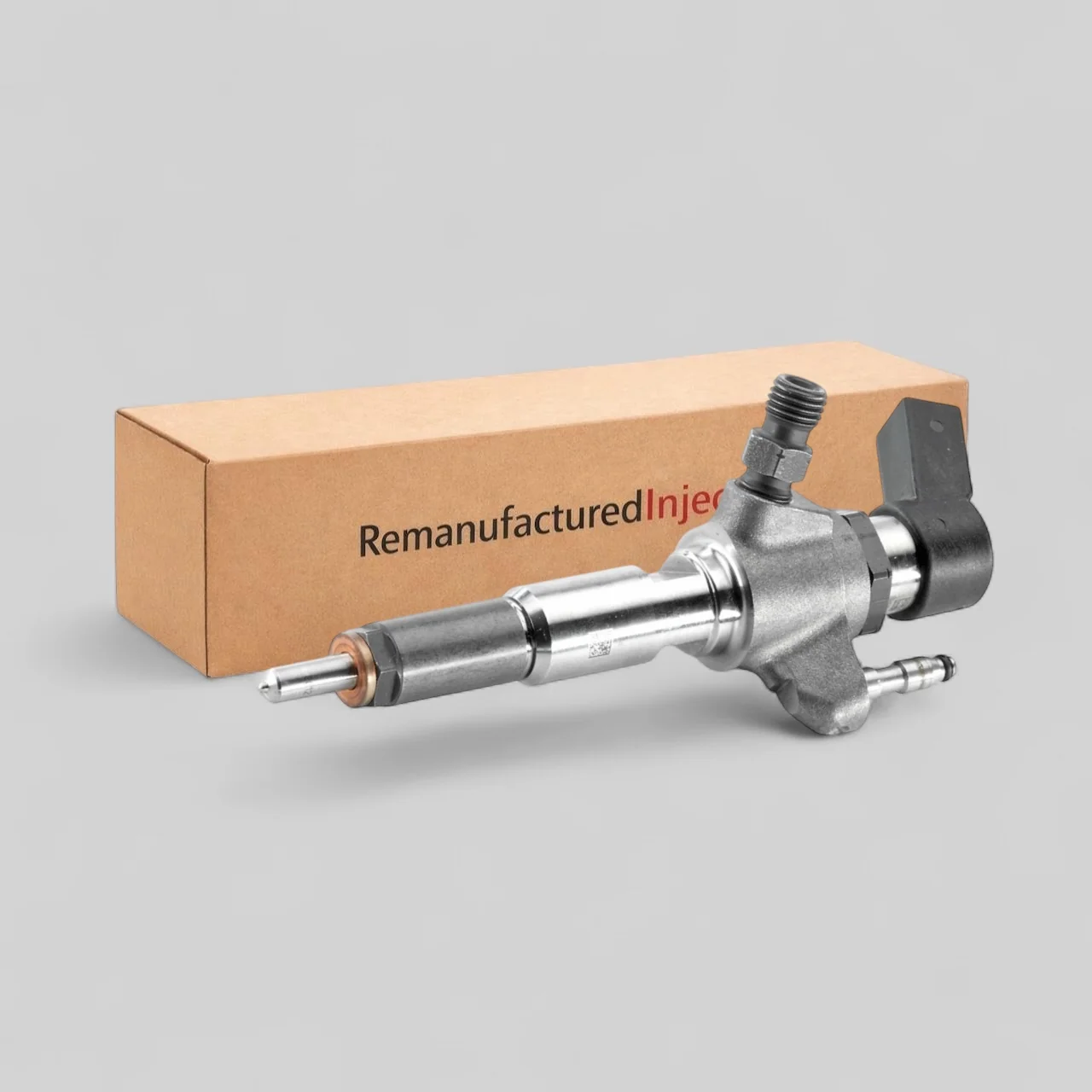
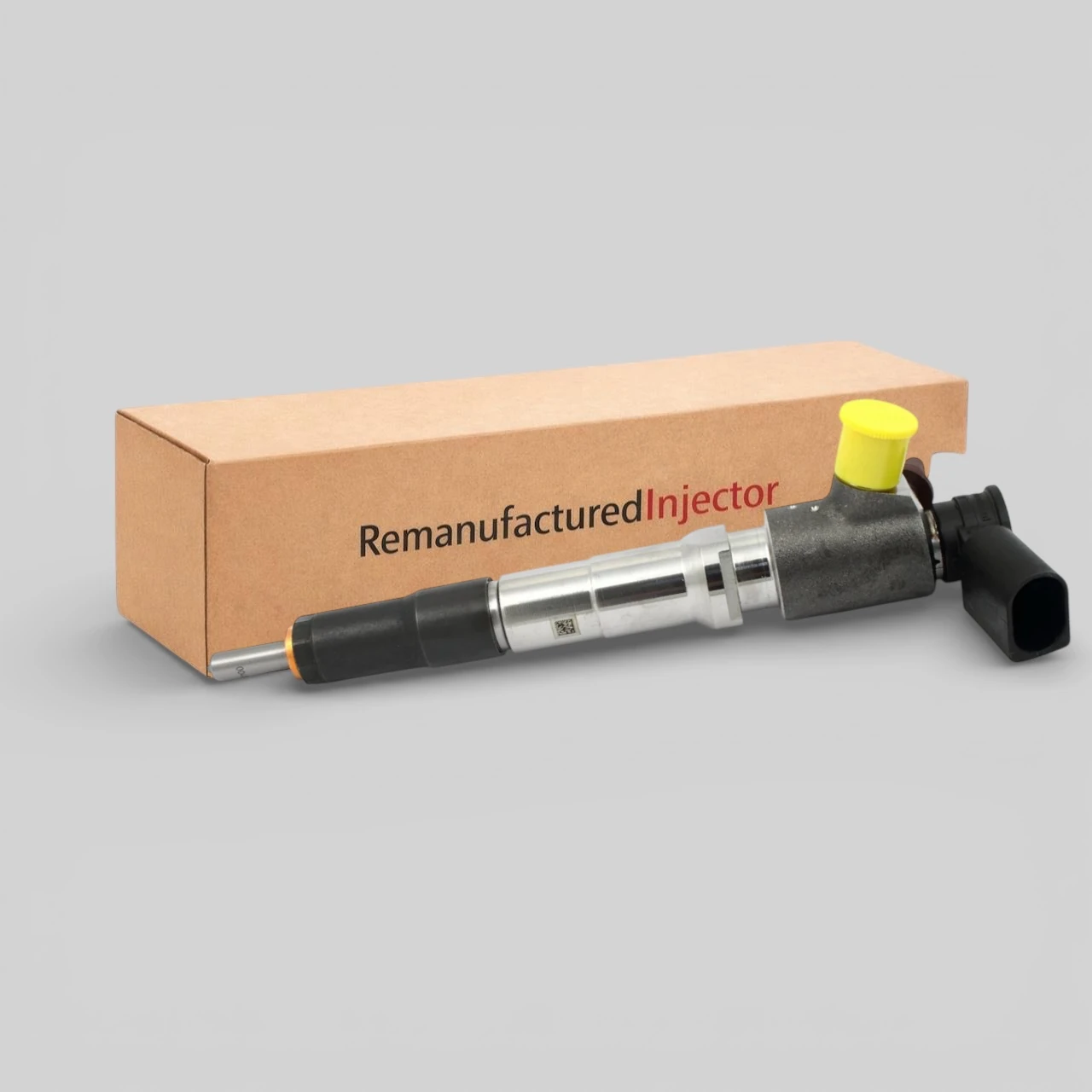
Vehicles and Engine Codes Using the 2802002051380
Engine code coverage spans Ford YMFS, YMF6, YMFA, YMFB, YMFC, YMFD, YMFE, YMFF, YMFG, YMFH, YMFK and YMFL — all 2.0-litre EcoBlue production sub-codes. UK fitment includes Ford Transit MK8 / Transit Custom / Transit Connect / Tourneo Custom 2.0 EcoBlue 105 / 130 / 170 / 185; Ford Ranger Wildtrak / Raptor Mk3 2.0 EcoBlue Bi-Turbo (note: the Bi-Turbo 213ps Ranger uses a different injector); Ford Galaxy / S-Max 2.0 EcoBlue 150 / 190; Ford Mondeo MK5 2.0 EcoBlue 150 / 190; Ford Focus MK4 2.0 EcoBlue 150; and Ford Edge MK2 2.0 EcoBlue 180 / 210 (rare in UK).
2802002051380 supersedes the earlier production codes 2802002050990 and 2802002051090 for the same EcoBlue platform — bore profile and connector keying identical across the supersession.
How EcoBlue Injector Wear Triggers AdBlue Faults
The 2.0 EcoBlue runs an SCR (Selective Catalytic Reduction) system using AdBlue (urea solution) injected into the exhaust ahead of the SCR catalyst to neutralise NOx. When one injector wears and over-fuels its cylinder, the exhaust NOx output rises on that cylinder's exhaust stroke. The SCR system responds by increasing AdBlue dosing — but the over-fuelled cylinder is also emitting more soot than NOx, so the AdBlue cannot fully compensate. The dashboard then logs an SCR or AdBlue-quality fault.
Workshops who replace the AdBlue tank or the SCR catalyst before addressing the worn injector will see the same fault return within 3,000 miles. The injector is the root cause; the AdBlue fault is the downstream symptom.
ECU Coding the New EcoBlue Injector
EcoBlue's ECU coding is the most demanding of any Ford diesel injector platform we ship for, because the SCR / AdBlue calibration is layered on top of the conventional cylinder-trim map. Ford IDS / FDRS handles both layers — generic OBD scanners do not, even those that support BK2Q / 4HG coding. As a working rule, if your scanner cannot also re-prime the AdBlue dosing pump, it is unlikely to handle the EcoBlue IMA write-back reliably either. Pre-booking with a Ford-pattern specialist is the practical answer for almost every fitter outside a main-dealer workshop.
Cylinder-index mapping on the 2.0 EcoBlue is straightforward 1-2-3-4 from the timing-chain end, but the SCR-aware coding sequence requires the AdBlue tank to be more than 25% full before IDS will accept the write-back — a low-AdBlue lockout that catches some workshops by surprise. Top up the tank before connecting the diagnostic tool.
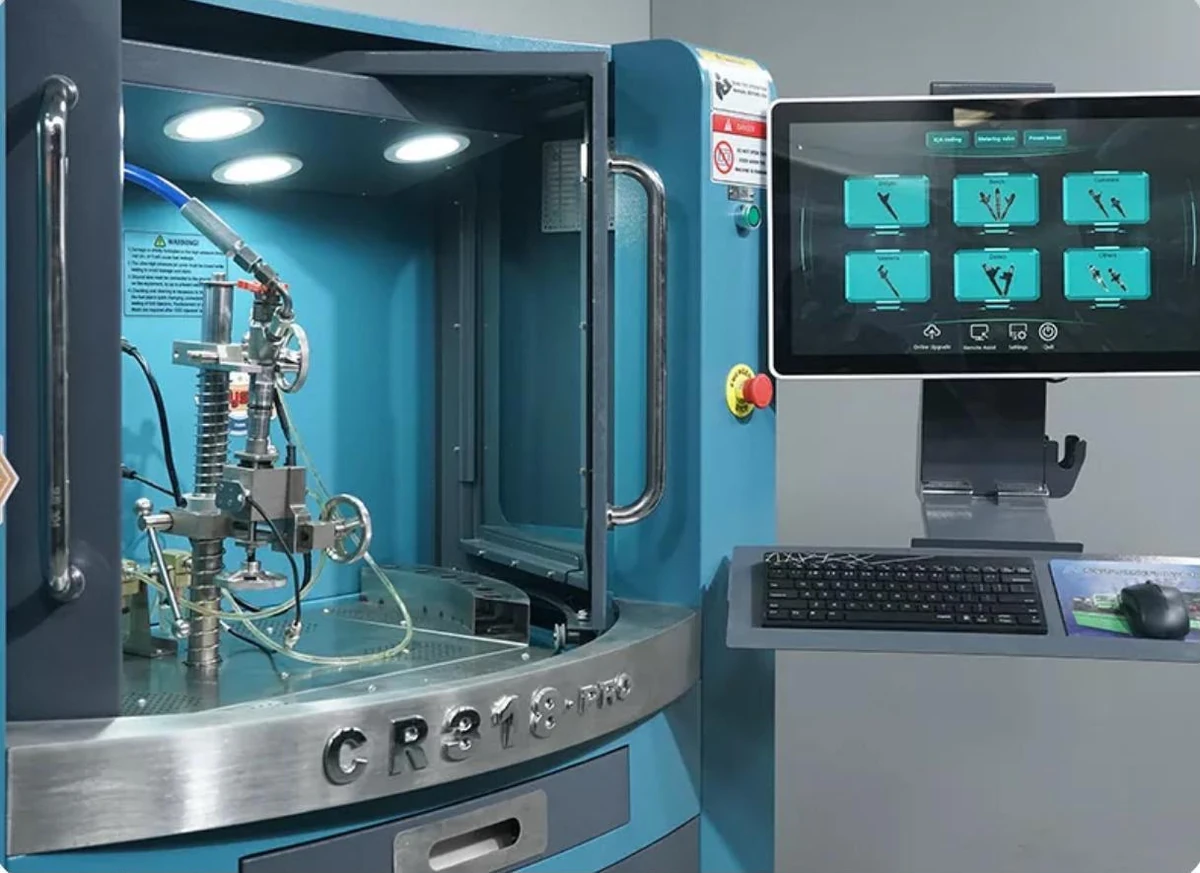
How EcoBlue Injectors Are Remanufactured
Ford EcoBlue cores show a wear pattern shaped by the SCR / AdBlue interaction — combustion is held very close to the lean limit to keep raw NOx output low (so the SCR has less work to do), which means a small nozzle-wear deviation produces an outsized AdBlue-system response. Our bench process therefore measures cylinder-by-cylinder NOx-out estimate alongside the conventional flow trace, and a unit that passes flow but is borderline on NOx-out is condemned. That is a stricter rejection criterion than we apply to the older 4HG / 4HH BK2Q family.
Output is the new sixteen-character IMA string — printed to the foil decal that ships on the body — plus a calibration certificate signed against the FORD-EcoBlue OE bench profile. Because EcoBlue injector coding can only be done on Ford IDS / FDRS at the time of writing, we recommend customers pre-book the coding step with their local Ford specialist before the unit arrives.