How a Failing 4M41 Injector Presents
On the Mitsubishi 4M41, a failing injector almost always announces itself first as cold-start smoke — heavy white during the first 30 seconds, often paired with a hesitant or rocky idle until the coolant climbs above 50 °C. The second signature is a perceptible loss of pull on hills above 70 mph in fifth or sixth gear, with no fault code logged. The third is a 'shake' through the gear lever at idle that disappears under load — single-cylinder over-fuelling pulling out-of-balance combustion through the gearbox mountings.
On a high-mileage Pajero or L200 over 150,000 miles, the most common pattern is two of the four injectors degrading together — typically cylinders 1 and 4 because they sit at the ends of the rail and see slightly different rail-pressure dynamics. Workshops should bench-test all four when one is condemned.
Vehicles and Engine Codes Using the 4M41 Injector
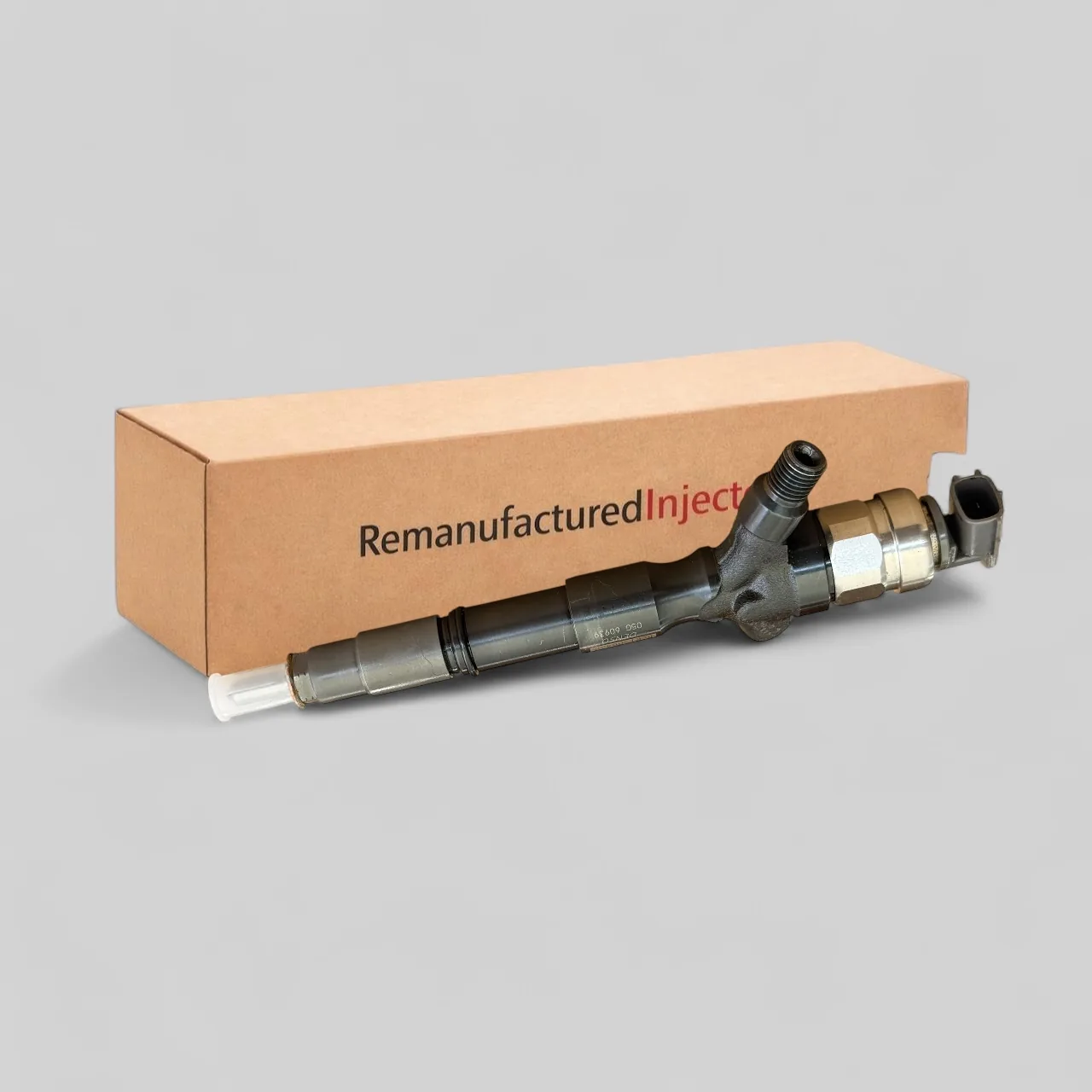
The DCRI105600 family is fitted across Mitsubishi Pajero MK4 / Shogun MK4 (V97W / V98W / V97 / V88 chassis) 3.2 DI-D from 2006-2018, Mitsubishi L200 4WD KB-series 3.2 DI-D (rare but present on facelifted long-wheelbase commercial variants), Mitsubishi Triton MN / ML 3.2 DI-D for export markets, Mitsubishi Challenger PB / PC 3.2 DI-D, and certain Fuso Canter / NPS-series light-truck applications also using the 4M41.
The injector body, calibration window and copper washer specification are identical across all 4M41 fitments — what changes between Pajero, L200 and the light-truck applications is the ECU calibration map and the per-cylinder injector trim values. Both live in the engine ECU rather than on the injector itself.
Denso Common-Rail Platform on the 4M41
DCRI105600 is a Denso G2-generation solenoid injector. It is supplied with a ten-character QR / ID code printed on the top of the body — Mitsubishi calls this the 'injector ID code' and uses it for cylinder-balance trimming. After fitting, the ID code must be entered into the ECU per cylinder using the Mitsubishi MUT-III diagnostic tool or a compatible aftermarket scanner that supports Mitsubishi 4M41 injector coding (e.g. Snap-on Solus, Autel MaxiSys with Mitsubishi pack).
Failing to enter the ID code is the most common reason for a freshly-fitted DCRI105600 to throw P0263 / P0266 / P0269 / P0272 cylinder-balance codes within fifty miles of installation. Never try to copy the code from the unit you removed onto the new one — every injector ships with its own unique ID string for a reason.
Leak-Off Testing and 4M41 Fuel-Quality Failures
A leak-off test on the 4M41 is straightforward — disconnect the four return-line spigots, fit a clear-tube manometer, run the engine at warm idle for ninety seconds and measure the volume returned per cylinder. Healthy DCRI105600 units return broadly equal volumes; a single unit returning visibly more is the failed one. On 4M41 specifically, a leak-off three or four times its sibling units is not unusual on a worn injector — these are heavily cycled units.
Fuel quality is the single most common cause of premature 4M41 injector failure, particularly on Pajero / Shogun vehicles used off-road or for towing. Water ingress through the in-tank breather, or sediment from infrequent diesel station fills, will pit the nozzle and condemn an injector in under five thousand miles. Before fitting any replacement, drop the fuel filter and inspect for water and rust.
How DCRI105600 4M41 Injectors Are Remanufactured
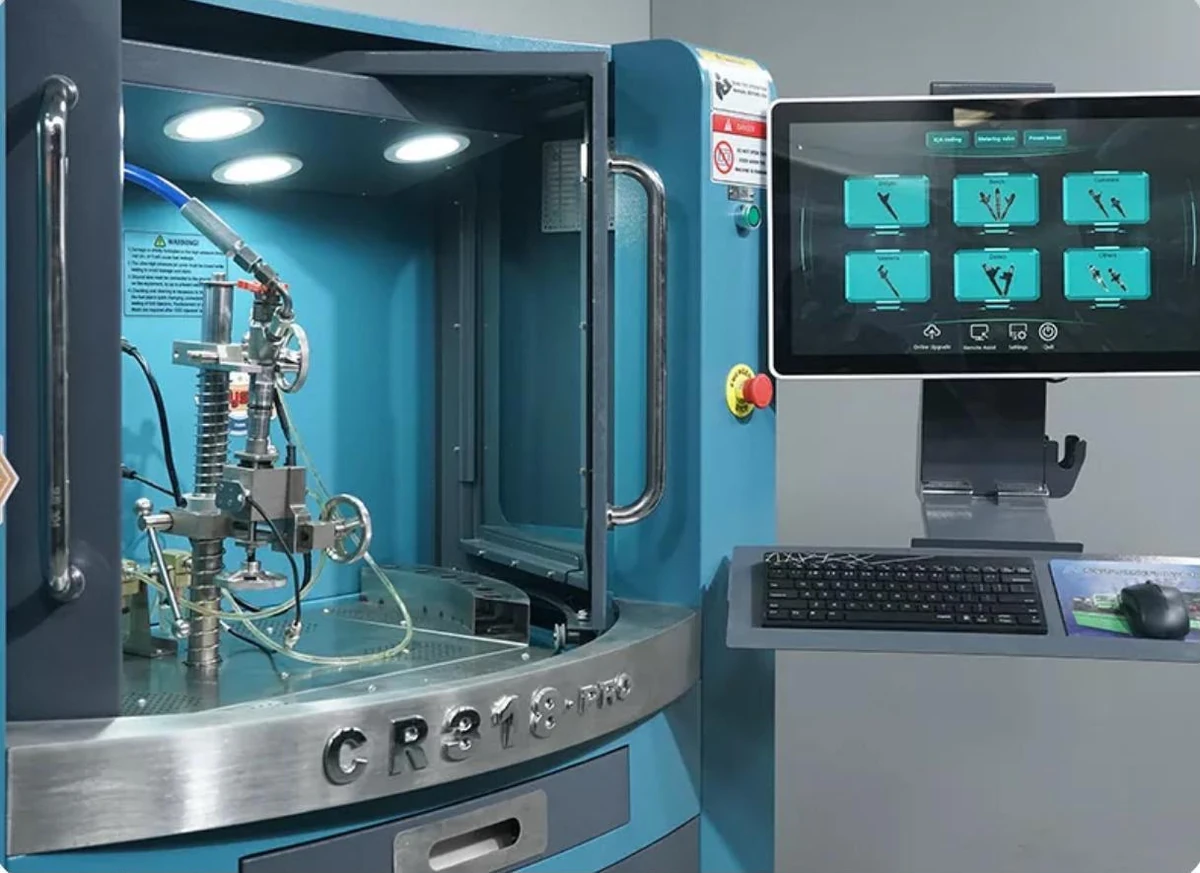
The 4M41 platform is one of the few high-volume diesel injectors we hold a dedicated Denso bench-cassette for. Each returned core is decarboned in an ultrasonic ammonium-bath cycle longer than the standard PSA / Continental flow, because Pajero / Shogun / L200 cores routinely arrive with combustion-deposit build-up two or three times what passenger-car cores carry. The deposit removal step is followed by a Denso G2 flow test at the OEM rail-pressure target of approximately 1,800 bar, and an idle stability run that catches the slow flow-drift that fleet 4M41 owners describe as 'gradually getting rougher'.
Sign-off on every unit requires three pass marks: charge-retention on the solenoid coil, spray-pattern integrity at the nozzle, and a fresh ten-character ID code laser-stamped on the body cap that the workshop will write into the ECU using MUT-III. Warranty period: 12 months parts only, regardless of mileage. Every unit ships with its bench-test print-out and a new copper sealing washer.